Talking with Pedro: No Paper for Newspapers in Venezuela

Discover more from JimmyBramlett Dot Com
Subscribe to get the latest posts sent to your email.

Subscribe to get the latest posts sent to your email.
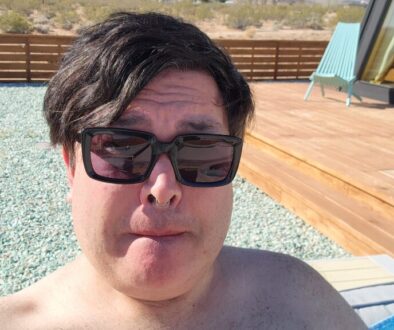
The only reason I really look forward to my birthday is that I get time off from work and that I usually rent an Airbnb out in the middle of the desert in the Joshua Tree vicinity with a pool, hot tub, and no one around for 5 acres. So here I am in Landers (or a bit away from it really) whose claim to fame was that it was the epicenter of a 7.3 earthquake in 1992 just hours before a separate 6.5 earthquake centered in Big Bear hit on a Sunday morning. Wild stuff.
I arrived here yesterday, and on the way had to stop to get gas. Since this stupid fucking illegal war with Iran has driven gas prices sky high again, I’ve mostly been back on public transit again because, fuck that. There I was at the Arco station jaw agape as the $30 went to $40 and on up until it landed at $72 for 13 gallons of gas. Yes, the “cheap” gas.
I’m going to be spending most of the time in or around the pool trying to finish Schattenfroh by Michael Lentz. I’m at around page 604, so I have about 400 more pages to go. I’ll be honest — I have no fucking clue what’s going on in the book. It’s a slow, slow read and demands your attention but not in a painstaking way. It’s a very enjoyable read, but I honestly don’t know how we get from one part to the next. Instead of trying to make sense of it, I’m just riding the wave, going where it’s taking me and try to make sense of it later.
I’ve started working on a couple of things with myself and hope to get better at as I begin my 48th year on this planet: I have started to journal more. It’s the most mundane scatterbrained thing. I hope it doesn’t cause someone’s head to explode when they go through my journals after I’m dead. (How cute. I think I have any importance that people will actually read what I write rather than just dispose it like they should.)
I need to curb my YouTube addiction. I don’t watch tv shows. I don’t watch sports all that much. I don’t use TikTok. I only doomscroll through Facebook at 3 am after I have woken up to take a piss. I am no longer perpetually online. But I will sit down and waste hours upon hours watching YouTube videos. I really need to get that in check.
That’s all I’ve got. Overall, I’m not happy, but I’m not completely depressed. Let’s just call it nonplussed. For someone who feels like a stranger in his own country, I guess that’s about as good as we can hope for.
Here’s a picture of the desert sunset:

Subscribe to get the latest posts sent to your email.

From

To

Fuck you.
Subscribe to get the latest posts sent to your email.
Occasionally, after reading certain books, when his disgust for daily life became particularly marked, he longed for the lenitive hours immersed in a cloister…
There is just a clause in the above sentence in the first chapter for J.-K. Huysman’s The Damned (Là-Bas) that really stuck out to me: “when his disgust for daily life became particularly marked.”
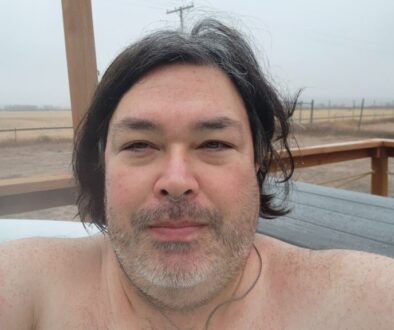
I had to go back to work today after two weeks off. The first week I did a road trip that culminated in being in a cabin for two days in Choteau, Montana that had a hot tub. It was nice to sit in the hot jets while it was 18F (-8C) outside. Then I meandered my way home before just doing nothing for the second week. Just sitting with my cats, sleep, and tell myself I was going to mop my floors before doing none of that.
After these weeks of doing a whole bunch of nothing, to my horror it was time to go back to work. The dread of walking into my office which I liken to a monkey cage at the zoo, plugging in my laptop and opening Outlook. Emails filled with complaints. That was the dread that was inside of me.
So I get it when Huysman’s protagonist Durtal has a “disgust for daily life.” It’s certainly reassuring that not a lot has changed over the last 130 or so years.
Oh. Happy 2026.
Subscribe to get the latest posts sent to your email.